Sector Highlights: Education
During my career I've been fortunate to work in a space that I am passionate about - policy, education and people.
The universities and TAFEs I have worked with are full of deeply committed, passionate people doing important work. But too often legacy ways of working get in the way - creating bottlenecks, slowing decisions, creating unnecessary friction and pulling time and energy away from students, research and real-world impact.
A question I hear again and again is: How do we move faster and make better decisions without losing quality or oversight?
From my work across the education sector, a few things feel increasingly clear:
Strategy needs to show up in everyday decisions, not just strategic plans
Capacity is unlocked by removing friction through simplifying processes, clarifying accountability and reducing duplication
Change sticks when it enables the team on the ground to focus on value and impact, not just activity
Teams want to learn, own and drive work but are often limited by bureaucracy, lack of professional development and limited opportunities to grow
I believe that education, regardless of its format, is a core pillar of the Australian economy.
Filled with passionate people, our universities and TAFEs are building essential workforce skills for Australia’s future, but many have not revisited their legacy models of working for many years, impacting their end-to-end experience.
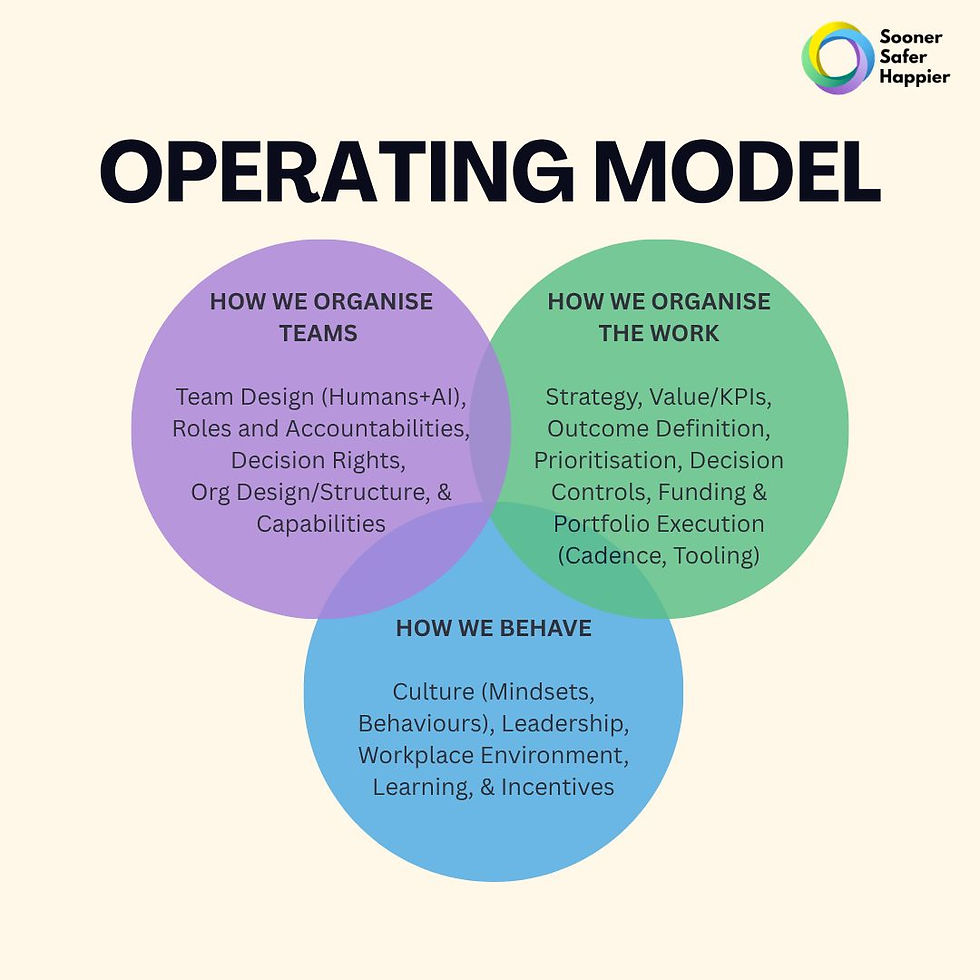
A common misconception is that operating models are about names in boxes. Through our diagnostics, we have found a diverse range of barriers from inefficient processes and systems to underlying cultural issues that are impacting teams. Addressing these means that time and capability are redirected to what matters most for students and academic impact.
The key shifts I have noticed are:

Key highlights of the work I have done in the sector include:
Connecting institutional strategy to on-the-ground delivery, translating vision into practical governance, delivery rhythms and decision forums in a $70m university-led program
Leading an Organisational redesign focussed on removing friction in processes and decision making to address delivery constraints, enabling teams to focus on higher-value work aligned to outcomes
Designing and implementing operating models within large, complex education environments, enabling faster decision-making, clearer accountability and stronger alignment between strategy and delivery
Navigating the political, cultural and operational realities unique to higher education to deliver uplift by reshaping ways of working to optimise for the existing team’s capability to deliver
Key learnings, as shown below, are as relevant to other industries as the education sector:

What’s resonating for you right now? Where are you seeing progress? What is next for education in Australia? Contact me on LinkedIn and let me know what you think!